The specialized services and consulting provided by the RAIZ team represent the Institute's commitment to producing cutting-edge knowledge with the aim of promoting increased competitiveness and productivity in the forestry and forestry sector.

atividade_1.jpg

Forestry Research and Consulting

The R&D and Forestry Consulting area of RAIZ generates scientific knowledge and develops technologies applied to genetic improvement and silviculture of eucalyptus, promoting the efficient use of natural resources such as soil and water, seeking to reconcile forest production with the conservation of natural ecosystems.

The area of Genetics, Biotechnology and Plant Production focuses on the development of clones and improved seeds capable of adapting to different soil and climate conditions, integrating criteria such as forest productivity, wood quality for pulp and paper, and resistance to pests and diseases. It involves the application of molecular tools to confirm clonal identities, perform paternity tests, estimate genetic diversity, and identify natural provenances. It uses techniques such as micropropagation and mini-cuttings to overcome limitations in the vegetative multiplication of clones, also evaluating the impact of nutrition and in vitro rejuvenation on the propagation of clonal plants.


It also includes proposals for innovative propagation protocols, such as advanced mini-cuttings and the use of bioreactors, as well as the management of flowering and seed production in dedicated orchards.

The Forest Protection area focuses on defining integrated strategies for pest and disease control, combining genetic resistance, biological methods, and biotechnological approaches, reserving chemical intervention only as a last resort. It includes research into natural enemies that can be used in biological pest control programs, reinforcing sustainable and low-impact solutions.


The ultimate goal is to reduce economic losses associated with biotic agents while simultaneously promoting the health and resilience of forest ecosystems.

The area of Edaphoclimatic Zoning and Forest Suitability is dedicated to the integrated characterization of soil and climate in mainland Portugal, producing edaphoclimatic zoning that allows for the assessment of forest suitability and the estimation of productivity under specific local conditions, serving as a basis for economic feasibility studies and strategic planning of forestry activity. It includes the development of suitability analyses and productivity models to support the establishment of new forest bases in different geographical areas, ensuring more informed and environmentally appropriate choices.


This work is complemented by training and technical support directed at Navigator's operational teams and forestry producer organizations, promoting a consistent application of knowledge in the field.

The Forestry and Environment area seeks to balance forest productivity with the maintenance of ecosystem services, ensuring that each intervention in the territory values natural resources and integrates principles of environmental preservation. This includes the development of forest hydrology studies to better understand water flows in ecosystems and support more informed management practices.


It also includes conducting climate change trials and models, analyzing their impacts on forest suitability and identifying resilience and adaptive forestry measures that will reduce the effects of predicted changes and strengthen the response capacity of forests.

The Forestry Technology area explores remote sensing methods—including drones, satellites, and LIDAR—to obtain accurate and up-to-date information about the territory and forestry operations. It relies on the creation of secure databases and the implementation of digital tools that support daily management, ensuring greater accuracy and efficiency. It uses Artificial Intelligence techniques to automate data collection and interpretation, strengthening diagnostic and decision-making processes. A central objective is to bring research closer to operational practice, ensuring that the knowledge produced is quickly converted into applicable solutions in the field.

The area of Extension, Development and Promotion of Forestry Knowledge focuses on the development of thematic maps and tools that support the management of eucalyptus plantations by forestry producers, facilitating more informed decisions. It values the dissemination of technical and scientific knowledge that contributes to the good management of forest ecosystems, using specialized platforms such as Florestas.pt , e-globulus, i-TEC Floresta and the knowledge library, which function as spaces for sharing and operational support.


It also includes an active commitment to training forestry technicians and producers, strengthening skills in matters related to forest management and environmental sustainability, with the aim of promoting more responsible and effective practices in the territory.

1.jpg

Technological Research and Consulting

RAIZ's R&D and Technological Consulting area develops scientific knowledge and state-of-the-art technologies applied to the entire value chain of the pulp and paper industry, wood and raw materials, pulp production, printing and writing paper, and tissue paper.

New applications are also being developed for industrial by-products in the context of the circular economy and emerging areas such as biorefineries and bioproducts.

The efficient use of resources, environmental preservation, and the sustainability of the value chain are cross-cutting and crucial themes in the activities of the Technological Research and Consulting area.

RAIZ possesses well-established expertise and knowledge in the characterization and technological evaluation (chemistry, morphology) of wood and forest materials from the perspective of their application as raw material for pulp or energy, but also for new applications, particularly in the context of biorefineries.

RAIZ develops activities in the field of optimizing cooking and bleaching processes, effluent treatment, and valorization of waste resulting from pulp production, from a circular economy perspective.


Alongside conventional pulp production processes, new biomass deconstruction processes are being developed in cooperation with academic and R&D partners, in the context of future forest biorefineries.

The pulp product is the subject of investigation, both from the perspective of its suitability for papermaking (printing and writing papers and tissue) and in other areas of application, particularly in the decorative paper sector.


New applications for the pulp are also being investigated and developed, using the fiber as reinforcement in thermoplastic biocomposites or fractionating its components into cellulose (micro and nanofibrillated) and hemicelluloses, and seeking new applications for these materials/products.

RAIZ develops foundational knowledge for understanding and improving the paper production process and its functional properties, as well as differentiating between printing and writing paper and tissue paper.


This project studies the pulp refining processes, the interaction of different components in the wet end chemistry, and the surface treatment and converting of the final paper. New applications for paper, particularly in the field of flexible electronics, are also investigated and developed with academic partners.

Raiz is involved in implementing the biorefinery concept in the pulp and paper industry, relying on its network of academic and R&D partners.


The areas of activity cover the fractionation, conversion (via chemical, thermochemical and biological means) and separation processes of biomass components. The products with the greatest focus include bioactive compounds from bark and wood, new materials and bioproducts derived from cellulose, hemicelluloses, sugars and lignin, and biofuels obtained by (bio)(thermo)chemical conversion of biomass and its components.

The Technological Consultancy covers the areas of pulp and paper production processes, environment and energy, aiming to find solutions that optimize operations or overcome new industrial, economic or legislative challenges, serving The Navigator Company and the pulp and paper sector.


In the environmental field, the development and evaluation of technologies for removing or reducing emissions in liquid and gaseous effluents are areas of particular importance. RAIZ is a partner of the national and European pulp and paper sector in the development of environmental legislation on requirements such as BREF or eco-labeling.

The Institute also possesses expertise in the surface treatment of paper through coating, extrusion coating and lamination processes, and in the characterization of surface and barrier properties. RAIZ develops knowledge in technologies for the functionalization of packaging papers, focusing on the development of barrier properties to meet the packaging requirements of the food market and other business areas with high quality demands.


The Institute also has expertise in the surface treatment of paper through coating, extrusion coating and lamination processes, and in the characterization of surface and barrier properties.

RAIZ is developing expertise in the production of molded cellulose articles based on eucalyptus fiber, which can replace single-use plastics in the food sector.


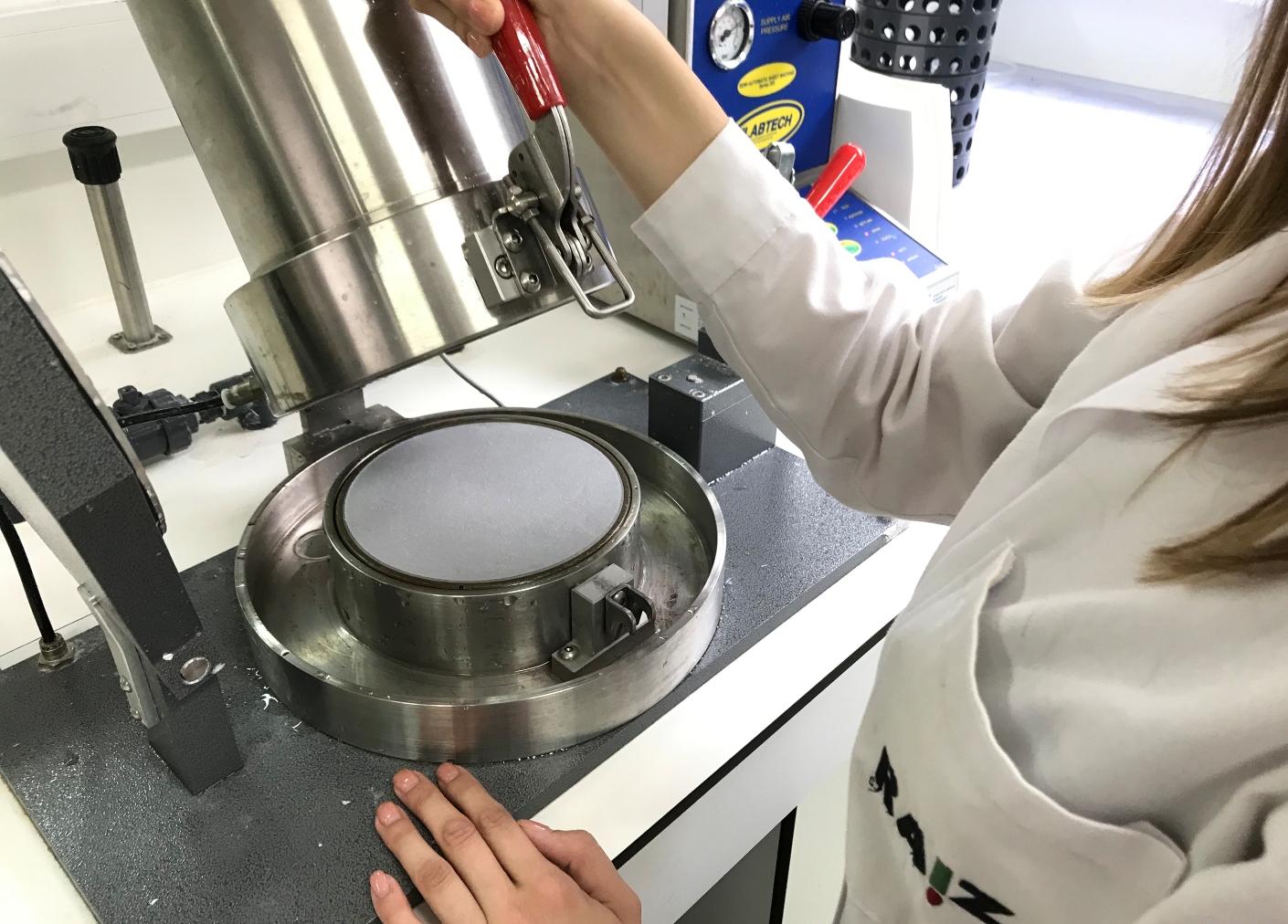
Water and grease barrier properties are fundamental characteristics of this type of packaging, and therefore extensive research has been carried out to obtain these properties. The Institute is equipped to produce prototypes of this type of product with different formulations.

Technological Surveillance and Industrial Property at RAIZ


The Technological Surveillance developed at RAIZ is integrated into a global network of The Navigator Company, which allows for the sharing of information and supports the continuous monitoring of technologies and products relevant to the business. In this context, the Technological Radar emerges, which, after being fed with the collected data, transforms the information into strategic insights, guiding strategies and driving new R&D projects.


The Industrial Property area manages patents, trademarks, and know-how, ensuring the protection of inventions developed at RAIZ and their correct use in industry. This activity ensures the valorization of the generated knowledge, facilitating technology transfer and the practical application of innovative solutions throughout the value chain.

Demonstration, Scale-Up and New Businesses


The results of the research developed at RAIZ are mostly internalized in the productive activity and core business products of The Navigator Company: forestry, pulp and paper (printing and tissue), molded pulp and energy.


However, there is a growing potential for generating new business, resulting from RAIZ's R&D activity and disruptive innovation , particularly in the emerging areas of biorefining, circular economy, and new applications of pulp and paper.


RAIZ's "Demonstration, Scale-Up and New Businesses" activity is part of a broader company network aimed at identifying, demonstrating (proof of concept), scaling up, and evaluating the technical and economic viability of new processes and products generated through R&D and disruptive innovation, with the potential to generate new businesses and start-ups.

block_atividade_3.jpg

Training

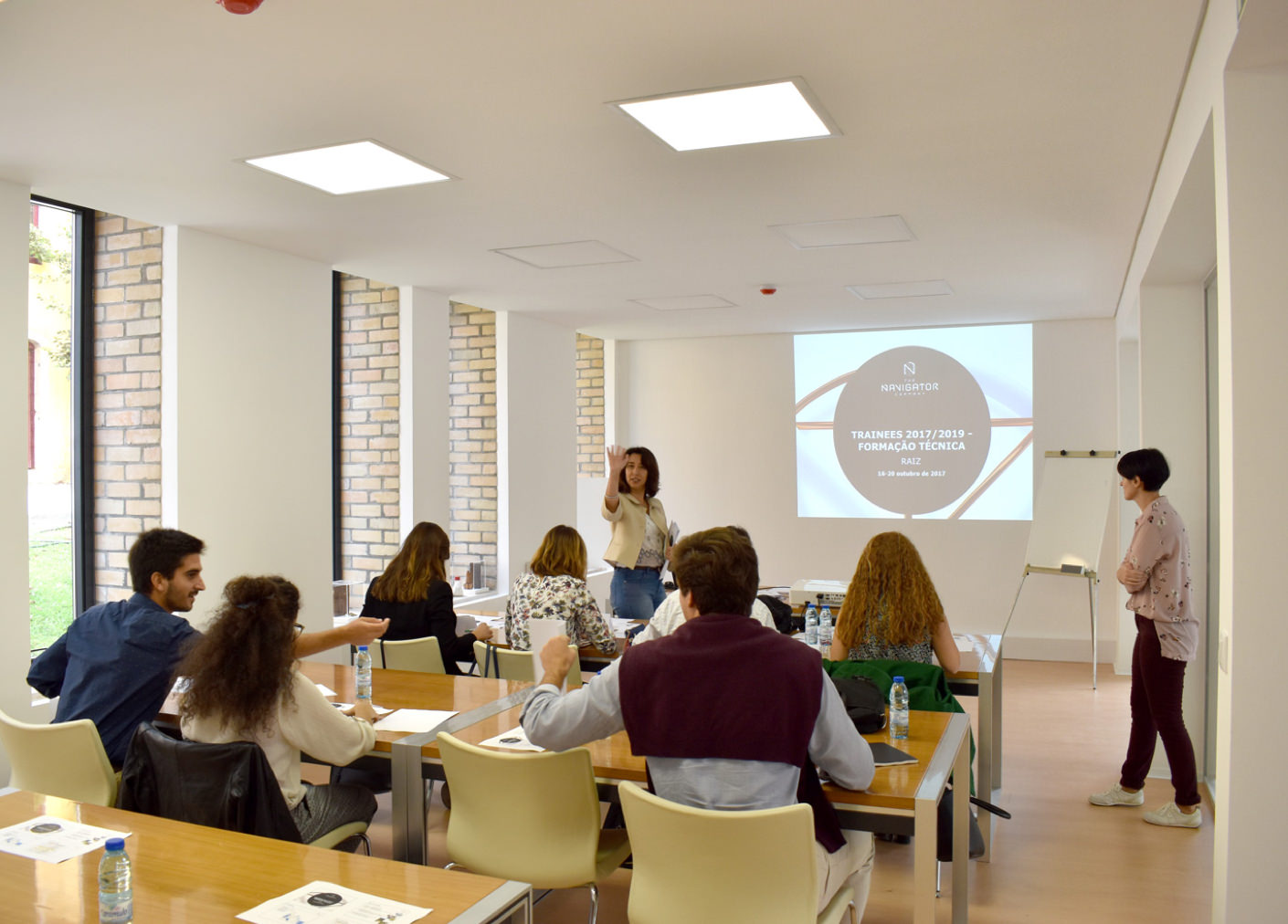
Raiz, in collaboration with its network of academic partners, promotes, develops, and participates in specialized and advanced training activities aimed at technicians or future professionals in the forestry production sector and pulp and paper industries, as well as civil society in general, prioritizing the following instruments:

  • Training for The Navigator Company employees, integrated into the “Navigator Learning Centre”;

  • Promotion and co-supervision of master's and doctoral theses with academic partners;

  • Funding and hosting of research grants;

  • Conducting specialized seminars and intensive courses;

  • Technical training for operational managers in the forestry production sector, aimed at transferring and utilizing knowledge in the field;

  • Participation in activities and teaching of specialized curricular units offered by academic partners;

  • Promoting "Guest Lecturers" with academic partners;

  • Production and dissemination of technical and scientific content for the forestry sector and civil society in general.